What is the Temporary Assistance for Needy Families (TANF) Program?
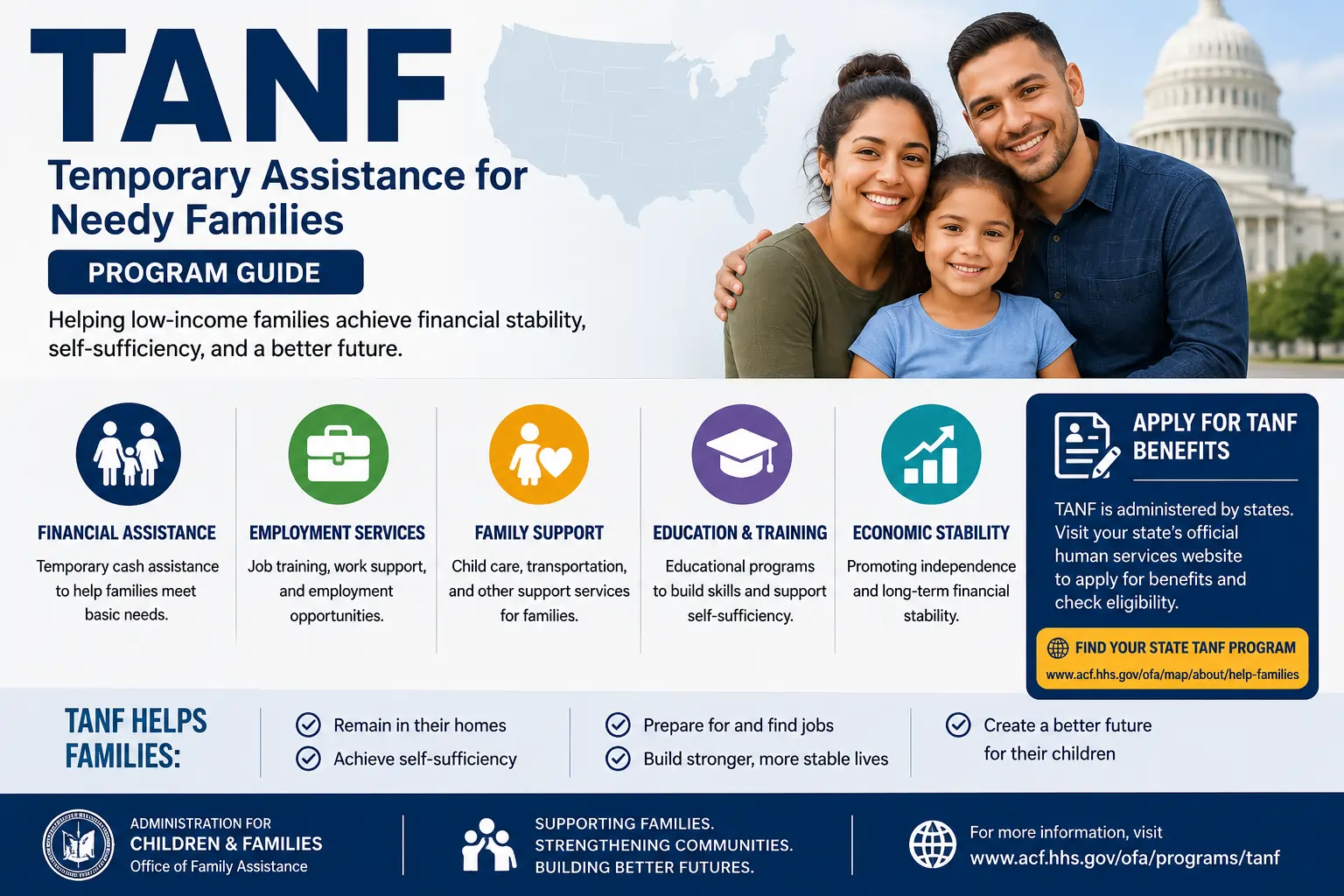
The Temporary Assistance for Needy Families (TANF) program is a government-funded initiative in the United States that helps low-income families with children achieve greater financial stability and self-sufficiency. Through federal funding provided to states and territories, TANF supports eligible families with temporary financial assistance, employment services, and various support programs.
Each state has flexibility in designing and managing its TANF program, allowing local governments to address the specific needs of their communities while following federal guidelines.
Key Objectives of TANF
The TANF program focuses on several important goals:
- Assisting needy families so children can remain in their homes.
- Encouraging job preparation and employment opportunities.
- Promoting economic independence and self-sufficiency.
- Supporting responsible parenting and family stability.
- Reducing long-term dependence on public assistance programs.
TANF Programs by State
Because TANF is administered at the state level, eligibility requirements, benefit amounts, and application procedures can vary significantly from one state to another.
Individuals interested in receiving TANF benefits should contact their state’s human services or social services agency for the most current information regarding:
- Eligibility requirements
- Income limits
- Benefit amounts
- Application procedures
- Employment and training services
TANF Data and Reports
The program collects and publishes information related to:
- Caseload statistics
- Program expenditures
- Work participation rates
- Recipient demographics
- Program performance metrics
These reports help policymakers, researchers, and the public better understand how TANF funds are utilized and how effectively the program serves eligible families.
Laws and Regulations
TANF operates under federal laws and regulations that establish program requirements while allowing states flexibility in implementation. These regulations help ensure accountability, transparency, and effective use of public resources.
Policy Guidance and Resources
Federal agencies regularly publish guidance materials to assist state and local TANF administrators. These resources may include:
- Program instructions
- Policy updates
- Information memoranda
- Frequently asked questions
- Administrative guidance documents
Such resources help ensure consistent program administration and compliance with federal requirements.
Training and Technical Assistance
Training and Technical Assistance (TTA) services are available to support TANF agencies and program administrators. These services help improve program operations, strengthen workforce development efforts, and enhance support for eligible families.
Training initiatives may focus on:
- Employment services
- Program management
- Data reporting
- Family support strategies
- Performance improvement
Reporting Requirements
State and territorial TANF agencies must comply with various reporting requirements established by federal authorities. These reports provide important information regarding program operations, funding, and participant outcomes.
Reporting requirements help maintain transparency and ensure proper oversight of TANF-funded activities.
Benefits of TANF
Families who qualify for TANF may receive assistance such as:
- Temporary cash assistance
- Employment and job training services
- Child care support
- Transportation assistance
- Educational and workforce development programs
Available benefits vary depending on state-specific policies and funding allocations.
Conclusion
The Temporary Assistance for Needy Families (TANF) program plays an important role in helping eligible low-income families achieve financial stability and economic independence. By combining temporary financial assistance with employment-focused services, TANF supports families as they work toward long-term self-sufficiency and improved quality of life.
Individuals seeking assistance should consult their state’s TANF agency for the most accurate and up-to-date eligibility and application information.
Apply for TANF Benefits
The TANF program is administered by individual states, so application procedures may vary. Applicants should visit their state’s official human services or social services website to apply for benefits and check eligibility requirements. TANF applications are generally available online, in person, or through local assistance offices.
Official TANF Information:
Administration for Children and Families (TANF)
Find Your State TANF Program:
Important Note
Eligibility requirements, income limits, benefit amounts, and application methods vary by state. Always apply through your state’s official TANF website or local human services agency to receive accurate and up-to-date information.