Introduction
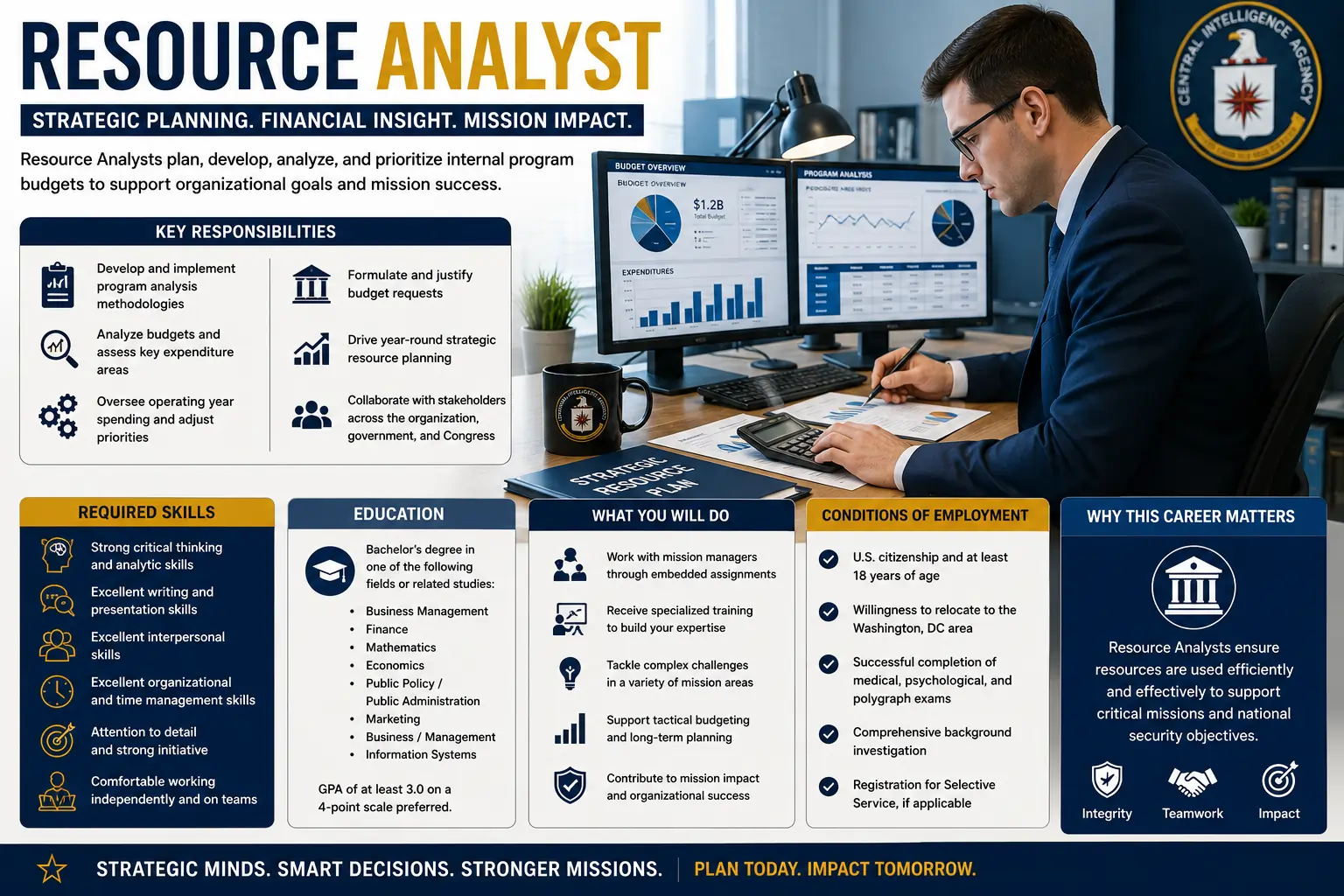
Resource Analysts play a critical role in helping organizations make informed financial and strategic decisions. By analyzing budgets, evaluating programs, monitoring expenditures, and supporting long-term planning initiatives, Resource Analysts ensure that resources are allocated efficiently to achieve organizational goals.
In today’s data-driven environment, organizations increasingly depend on skilled professionals who can transform financial information into actionable insights. Resource Analysts bridge the gap between financial management and strategic planning by providing decision-makers with accurate analysis and recommendations.
This comprehensive guide explores the responsibilities, required skills, educational qualifications, career prospects, and future opportunities associated with the Resource Analyst profession.
What Is a Resource Analyst?
A Resource Analyst is a financial and strategic planning professional responsible for evaluating budgets, assessing program effectiveness, monitoring expenditures, and supporting resource allocation decisions.
These professionals analyze financial data, identify trends, forecast future requirements, and provide recommendations that help organizations maximize efficiency and achieve their objectives.
Resource Analysts often work closely with leadership teams, program managers, financial specialists, and operational stakeholders to ensure that resources are used effectively and responsibly.
Key Responsibilities of a Resource Analyst
Budget Planning and Development
One of the primary responsibilities of a Resource Analyst is developing and managing budgets. This includes:
- Creating budget forecasts
- Monitoring spending trends
- Evaluating funding requirements
- Supporting financial planning initiatives
- Identifying potential budget risks
Effective budget management helps organizations maintain financial stability while supporting operational priorities.
Program Analysis
Resource Analysts evaluate programs to determine whether resources are producing desired outcomes.
Their analysis may include:
- Performance measurement
- Cost-benefit analysis
- Resource utilization reviews
- Program effectiveness assessments
- Strategic impact evaluations
These assessments help organizations make informed decisions regarding future investments.
Financial Reporting
Resource Analysts prepare reports that summarize financial performance and resource utilization.
Common reporting responsibilities include:
- Budget status reports
- Financial forecasts
- Resource allocation summaries
- Cost analysis reports
- Executive briefings
Clear reporting ensures that stakeholders have accurate information for decision-making.
Strategic Resource Planning
Long-term planning is a vital aspect of the profession.
Resource Analysts help organizations:
- Forecast future funding needs
- Align resources with strategic objectives
- Identify efficiency improvements
- Support organizational growth initiatives
- Evaluate long-term investment opportunities
Stakeholder Collaboration
Resource Analysts regularly collaborate with multiple departments and decision-makers.
Strong communication helps them:
- Gather financial requirements
- Explain budget recommendations
- Present analytical findings
- Support planning discussions
- Build consensus among stakeholders
Essential Skills for Resource Analysts
Financial Analysis
A strong understanding of financial principles is essential.
Key competencies include:
- Budget analysis
- Financial forecasting
- Cost estimation
- Resource allocation
- Risk assessment
Critical Thinking
Resource Analysts must evaluate complex information and develop practical solutions to organizational challenges.
Critical thinking enables professionals to:
- Assess alternatives
- Identify risks
- Improve efficiency
- Support strategic decisions
Communication Skills
Analysts frequently present complex information to non-technical audiences.
Strong communication skills are necessary for:
- Writing reports
- Delivering presentations
- Explaining financial concepts
- Supporting executive decision-making
Organizational Skills
Managing multiple projects and deadlines requires exceptional organization and time management.
Attention to Detail
Even small errors in financial analysis can have significant consequences. Resource Analysts must maintain high levels of accuracy when working with budgets and financial data.
Educational Requirements
Most Resource Analyst positions require a bachelor’s degree in a relevant field.
Common educational backgrounds include:
- Finance
- Economics
- Business Management
- Public Administration
- Public Policy
- Marketing
- Mathematics
- Business Information Systems
- Management Information Systems
Degrees that emphasize analytical thinking, research, problem-solving, and communication skills are particularly valuable.
Career Advancement Opportunities
Resource Analysts often progress into senior leadership and management positions.
Potential career paths include:
Senior Resource Analyst
Experienced professionals may oversee larger budgets and more complex financial programs.
Financial Manager
Financial managers supervise budgeting, forecasting, and financial operations.
Budget Director
Budget Directors lead strategic planning initiatives and oversee enterprise-level financial management.
Program Manager
Some Resource Analysts transition into program management roles where they oversee both operational and financial performance.
Strategic Planning Specialist
Professionals with strong analytical skills often move into long-term planning and organizational strategy positions.
Why Resource Analysts Are Important
Organizations rely on Resource Analysts to ensure that limited resources are used efficiently and effectively.
Their work contributes to:
- Better financial decisions
- Improved operational performance
- Enhanced accountability
- Increased organizational efficiency
- Long-term sustainability
Without proper resource analysis, organizations may struggle to allocate funds effectively and achieve strategic objectives.
Future Outlook for Resource Analysts
The demand for skilled financial and analytical professionals continues to grow across public and private sectors.
Emerging trends influencing the profession include:
- Data-driven decision making
- Advanced financial analytics
- Business intelligence tools
- Predictive forecasting
- Performance measurement systems
Professionals who combine financial expertise with strong analytical and communication skills will remain highly valuable in the evolving job market.
Conclusion
Resource Analysts play a vital role in helping organizations manage budgets, evaluate programs, and make strategic decisions. Their expertise in financial analysis, planning, and resource management supports operational success and long-term growth.
With strong career prospects, diverse advancement opportunities, and increasing demand for analytical professionals, Resource Analysis remains an attractive career path for individuals interested in finance, strategy, and organizational management.
As organizations continue to focus on efficiency, accountability, and data-driven decision-making, Resource Analysts will remain essential contributors to achieving organizational goals and maximizing resource effectiveness.